
Let me start with a slightly surprising fact: when it comes to looks, fighting, and pure "first-glance coolness," Darth Maul actually beats Darth Vader on every front. He had a fearsome face covered in red and black tattoos, a red lightsaber that could spin into a double blade, and an assassin's outfit that made toy companies go wild. The moment he stepped on screen in 1999's The Phantom Menace, audiences gasped.
Yet more than twenty years later, when we say "the greatest Star Wars villain," the first thing that pops into most people's heads is still that black armor and that heavy, mechanical breathing.
My argument is simple: Vader isn't more popular because he's stronger or cooler. He's more popular because he has four things Maul never got — enough screen time to grow on you, a heartbreaking reason for turning evil, a look and sound people recognize in an instant, and one emotional bombshell that changed cinema history. Maul didn't lose because he was less cool or less skilled. He lost because he had no depth.
🎯
How popular a villain becomes doesn't depend on how evil or how cool he is. It depends on what the audience sees in him. Vader lets audiences see "a man who once wanted to be good, but lost his way step by step." Maul only lets them see "a perfect weapon."
1. Time: Vader Turned "Showing Up" Into "Staying With Us"
Darth Maul appears on screen for about six minutes and eighteen seconds in The Phantom Menace, with only three lines of dialogue — 33 words in the entire movie. Most of that tiny amount of screen time went to the famous "Duel of the Fates" fight. Hollywood star Benicio del Toro was reportedly cast to play Maul at one point, but he backed out after the character's lines were cut down to just three. It's hard to fall in love with a villain who barely gets to speak, no matter how cool he looks.

Vader is completely different. He appears across the original trilogy, and the prequels gave him a full story of how he fell — from a slave boy on Tatooine, to the shining Jedi hero Anakin Skywalker, to the Vader who put on the black helmet. A villain's appeal needs time to grow. Audiences need to see him again and again, and feel the fear build up, before they can truly hate him and pity him at the same time.

Here's a fascinating twist: if you count all of Maul's appearances in animated shows and spin-offs, he actually has more total screen time (about 142 minutes) than Vader (about 76 minutes). Even so, he still can't shake Vader's throne. Because Vader's minutes happened in movie theaters, in the shared memory of generations. Maul's minutes mostly happened on streaming services and in cartoons. The density of presence decides the strength of a legacy.
2. Motivation: When We Love a Villain, We Love the Story of Why He Became One
Maul's evil is pure — and that's exactly why it's thin. He was trained from childhood to be a weapon. He wants revenge for the sake of revenge, darkness for the sake of darkness. When Obi-Wan cut him in half, audiences were amazed by the fight, not moved by his fate. Nobody asks "why does Maul hate so much?" Because his hatred feels expected — and expected hatred has no layers.

Vader is different. His evil breaks your heart, because he wasn't born bad. He was the legendary Chosen One, and he fell because of love — to save his wife Padmé, he made a deal with the Emperor that destroyed his soul. He sank deeper out of regret, and every evil act cut off another road home. In the end, it was his love for his son Luke that saved him. That's a complete arc: love made him fall, and love brought him back.
Dave Filoni, the director of the animated Star Wars shows, once made a sharp observation: Vader is at his most terrifying when he's at his most "inhuman" — in that hallway scene in Rogue One, he doesn't say a single word to the soldiers, because in his eyes they aren't people. They're just "objects that need to be removed." That horror only works because we've seen with our own eyes that he used to be a man.
Maul's rage makes people gasp. Vader's pain makes people feel. That's the difference between "cool" and "deep."
3. Symbols: The Ability to Be Recognized in a Single Second
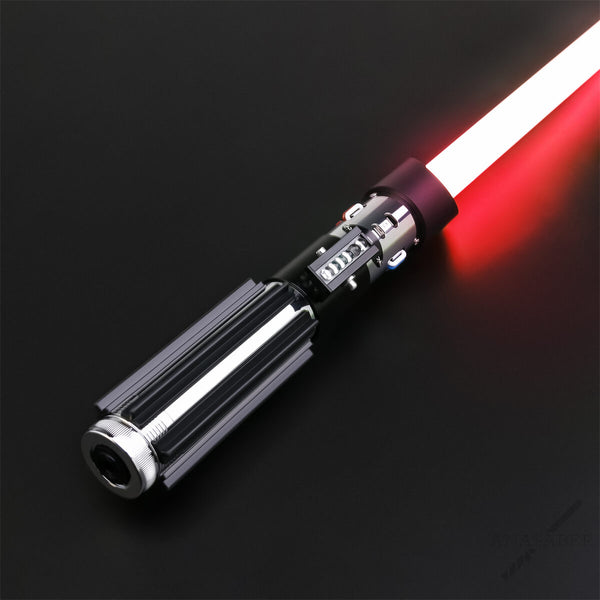
Every part of Vader is a hook for memory: the black samurai armor (inspired by the Japanese warriors in Akira Kurosawa's movies), the heavy mechanical breathing, the Imperial March theme that everyone can hum, and James Earl Jones' deep voice. Put them together and you get fear that works almost like a reflex — the screen lights up, the breathing starts, and the whole theater holds its breath.
The official Star Wars website once joked that Vader is the most-dressed-up character in the entire galaxy every Halloween — even a guinea pig wearing a Vader helmet looks "kind of menacing." That's the universality of the design. It doesn't need language, it doesn't need a storyline, and it doesn't even need a human body.

Maul's coolness, though, is "first-glance coolness": the double lightsaber, the red and black tattoos. It amazes you — but once the amazement fades, there's nothing left to hold onto. You remember his face, but you can't recall his voice, his theme song, or a single famous line. Amazement lasts a moment. Recognition lasts a lifetime.
4. The Emotional Bomb: One Line That Reshaped the Whole Saga
In 1980's The Empire Strikes Back, Vader said those words to Luke. From that moment, the entire weight of the Star Wars saga changed. The villain was no longer just a villain — he was a father. The hero was no longer just a hero — he was a son. For more than forty years since, countless movies and shows have tried to copy that structure, but almost none have recreated the shock.
The behind-the-scenes story makes it even more special: that line wasn't in anyone's script. During filming, David Prowse (the man inside the Vader suit) was given the line "Obi-Wan killed your father." Mark Hamill, who played Luke, wasn't told the truth until right before the scene was shot, and he was forced to keep the secret for over a year. The whole crew only found out what really happened when they watched the finished movie.

Even the line the whole world remembers is a misquote — Vader actually says "No, I am your father," not the widely repeated "Luke, I am your father." But the fact that even the misquote became a cultural phenomenon is the strongest proof of its power.
Maul never had a bomb like that. He had no personal connection to the hero. His hatred for Obi-Wan was "professional," not "family." He was cool, but he never changed anyone's life.
5. In Fairness to Maul
If I ended here, it wouldn't be fair to Maul. To be honest, George Lucas himself realized that killing Maul in The Phantom Menace was a mistake. That's why, years later, he had Dave Filoni bring him back in the animated show The Clone Wars. The revived Maul finally got a full story arc — he ruled Mandalore, took the Darksaber, fought his final fateful duel with Obi-Wan, and in his last moments asked, "Is the one I was protecting the Chosen One?" — and found some peace in the answer. Some critics even say the Disney-era Maul was written better than Vader.
But here's the interesting part: even with a fuller and more tragic arc, Maul's popularity still can't touch Vader's. In 2025, Star Wars Celebration announced a new animated show, Maul: Shadow Lord, with Sam Witwer back as the voice — Maul is still gaining fans. But Vader no longer needs any new project to prove himself.
And that proves a point: popularity isn't the same thing as good writing. Popularity is the sum of how far a symbol spreads, how deeply people connect with it emotionally, and how strongly it's tied to generations of memories. Maul won a battle. Vader won the war.
|
Aspect
|
Darth Vader
|
Darth Maul
|
|---|---|---|
|
Original screen time
|
Appears across the original trilogy, plus the full fall-from-grace story in the prequels
|
Only about 6 minutes 18 seconds and 3 lines in The Phantom Menace
|
|
Core motivation
|
Fell through love, saved through love (a deal with the devil)
|
Revenge for revenge's sake — pure but shallow
|
|
Memory hooks
|
Black armor, breathing, Imperial March, deep voice
|
Double lightsaber, red and black tattoos
|
|
Emotional bomb
|
"I am your father" — reshaped the saga's emotional core
|
None. No personal connection to the hero
|
|
Place in film history
|
Third in AFI's greatest villains, first in Empire magazine, 33% of votes in a fan poll
|
A cult favorite that found its glory in animation
|
Conclusion: Coolness Fades, Connection Lasts
Maul's coolness is the coolness "we wish we had" — a fantasy of power, hatred, and never looking back. Vader is "the person we're afraid of becoming, yet can't stop looking at" — a connection about love, falling, and the chance of redemption.
So the answer brings us back to the beginning: Vader wins because he's "a person," while Maul is "an image." An image can be admired. A person can be remembered. And being remembered is what popularity really means.